Most lower back pain is not caused by anything serious and usually gets better with time. Here are the practical things people commonly find useful at home.
1. Keep moving, gently
It's tempting to lie down and wait it out, but NHS guidance recommends staying as active as you can and carrying on with daily activities where possible. Short, regular walks, standing up every half hour and gentle movement help you avoid stiffening up. Little and often matters more than big efforts.
2. Try warmth for everyday stiffness
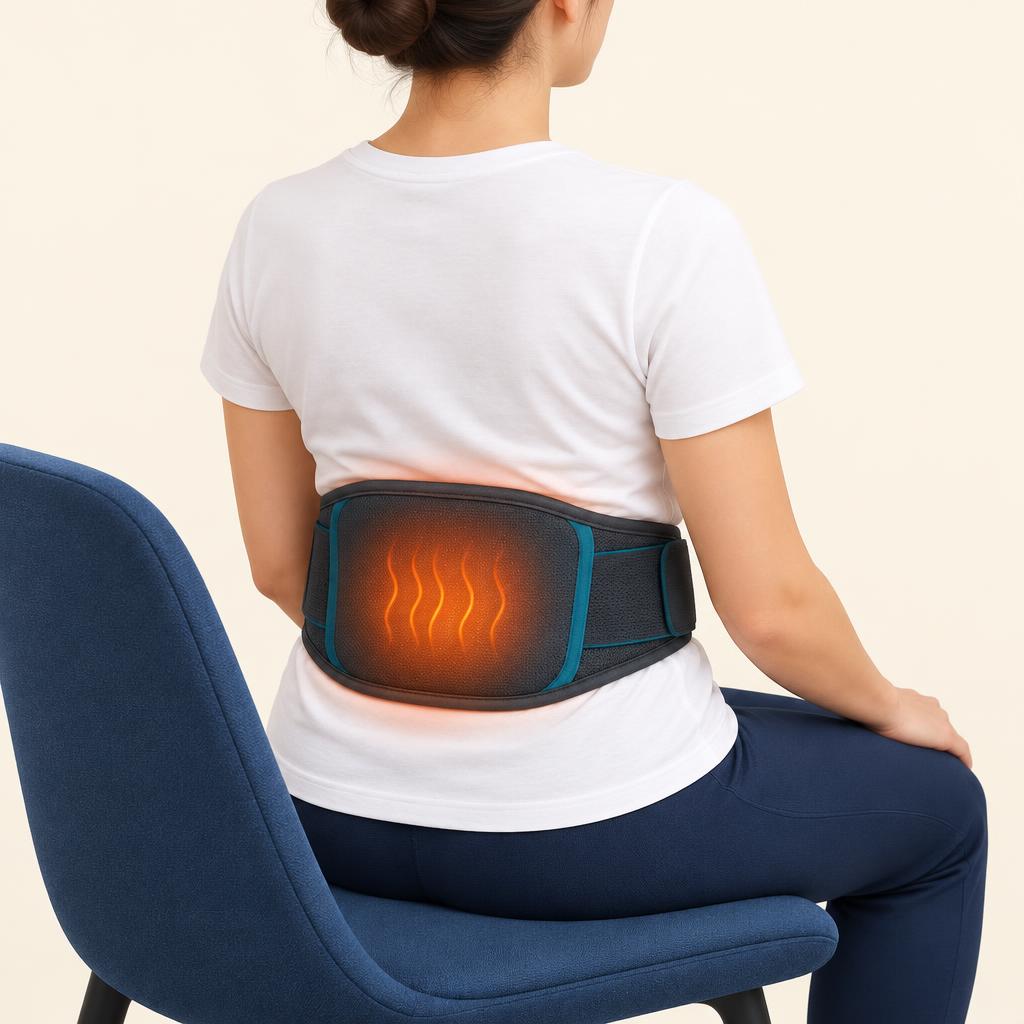
Many people find warmth comforting on a stiff, achy back, and it can make gentle movement feel easier afterwards. Hot water bottles and wheat bags work, but they cool down and you have to stay still to keep them in place. Always use a cover, never apply heat to broken or numb skin, and never fall asleep with a heat source on.
Heat or ice?
| Warmth | Cold pack | |
|---|---|---|
| Commonly used for | Everyday stiffness and ache | The first day or two after a strain |
| How it tends to feel | Relaxing and comforting | Cooling and numbing |
| Session length | Around 15–20 minutes | Up to about 20 minutes, wrapped in a towel |
| Avoid | Sleeping with it on, numb or broken skin | Ice directly on the skin |
More detail in our guide: heat or ice for back pain.
3. Look at the hours you spend sitting
You don't need an expensive chair. Sit back so your lower back is supported (a small cushion or rolled towel in the curve helps), keep your feet flat, your knees roughly level with your hips and your screen at eye level. Most importantly, get up and move regularly.
4. Sleep position and mattress
Side sleepers often find a pillow between the knees more comfortable. Back sleepers often prefer a pillow under the knees. A mattress that sags badly in the middle may be worth reviewing.
5. Gentle stretches through the day
Slow, gentle movements such as knee-to-chest, pelvic tilts and gentle rotations can help you feel less stiff. Stop any movement that makes the pain sharply worse. See our back stretches for desk workers.
6. Massage the whole area
Many people prefer broad, gentle massage across the muscles either side of the spine to pressing hard on one sore point. It's also much easier to do on your own back. Read how to massage your lower back.
A simple daily routine for desk workers
- Morning: a 10-minute walk and a few gentle stretches.
- Every 30–45 minutes: stand up, walk to get water, roll your shoulders.
- Lunch: get outside for a walk, even a short one.
- Evening: 15 minutes of gentle warmth while you relax, then light stretches before bed.
What doesn't usually help
- Long periods of bed rest, which tend to leave people stiffer
- Avoiding all movement out of worry. Gentle activity is generally encouraged
- Pushing through sharp or worsening pain
- Products promising a "cure". No belt, gadget or cream can promise that