Back care guide
How to massage your own lower back at home
You don't need to buy a device to try gentle self-massage. Start with your hands or a tennis ball against a wall, keep pressure comfortable, and stop if symptoms worsen.
Reviewed 29 September 2026 by the Vibraflex UK team. General wellbeing information, not medical advice.
Before you start
Choose a position where you can relax and control the pressure. A warm shower may feel pleasant beforehand, but you can skip heat entirely. Avoid pushing on bones or working through sharp pain. Self-massage is a comfort option, not a treatment for the cause of back pain.
If your back pain followed a serious accident, gets worse quickly, or comes with new weakness, numbness or bladder or bowel changes, read the NHS back pain advice for when to seek urgent help. Do not try to massage through these symptoms.
Three simple steps for self-massage
Try the option that is easiest to control. You can stop after any step.
Start with an open hand
Sit or stand comfortably. Reach only as far as you can without twisting or straining, then make small, slow circles with the flat of your hand over the soft muscles to either side of the lower spine. Keep it gentle. If reaching behind you is awkward, skip this method instead of forcing it.
Try a tennis ball against a wall
Put one tennis ball between a wall and a soft area beside your lower spine. Bend your knees slightly and lean in only enough to feel comfortable pressure. Hold briefly or move a little to a nearby spot. Keep the ball off the bony spine; step away if the pressure is unpleasant.
Pause and check how you feel
Take a break rather than working harder on a tender spot. If you feel sharp pain, tingling, numbness or symptoms spreading into a leg, stop. Massage is optional comfort care, not a test of how much pressure you can tolerate.
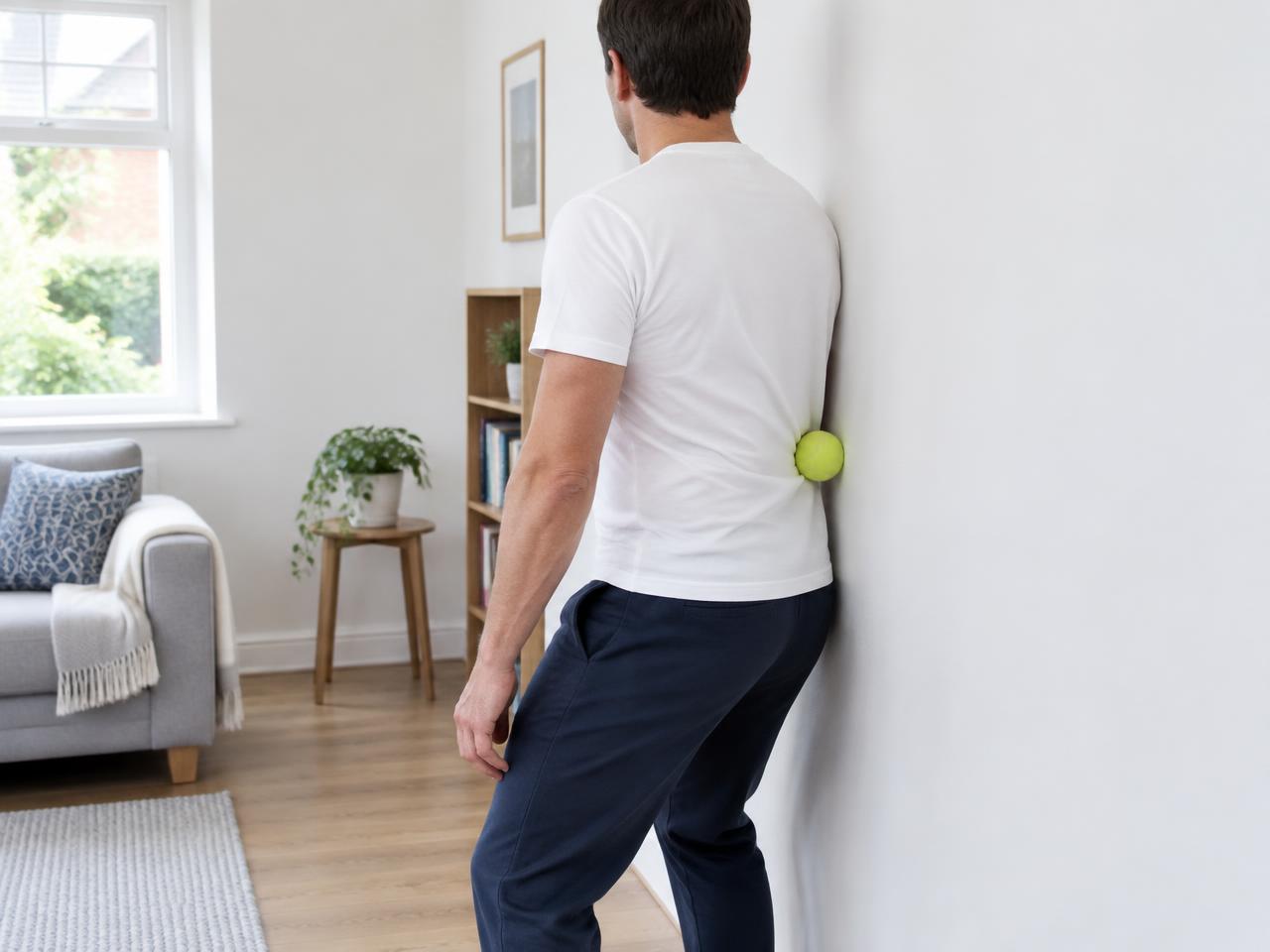
Technique reference: Kaiser Permanente self-massage guide. The NHS back pain guide explains when home care is appropriate and when to seek help.
Which approach suits you?
Hands
Free and easy to adjust, but reaching your lower back can be uncomfortable.
Tennis ball and wall
Low-cost, targeted pressure that you control by leaning less or stepping away.
Wearable belt
Hands-free warmth and vibration over a wider area, but it cannot copy the precise pressure of hands or a ball.
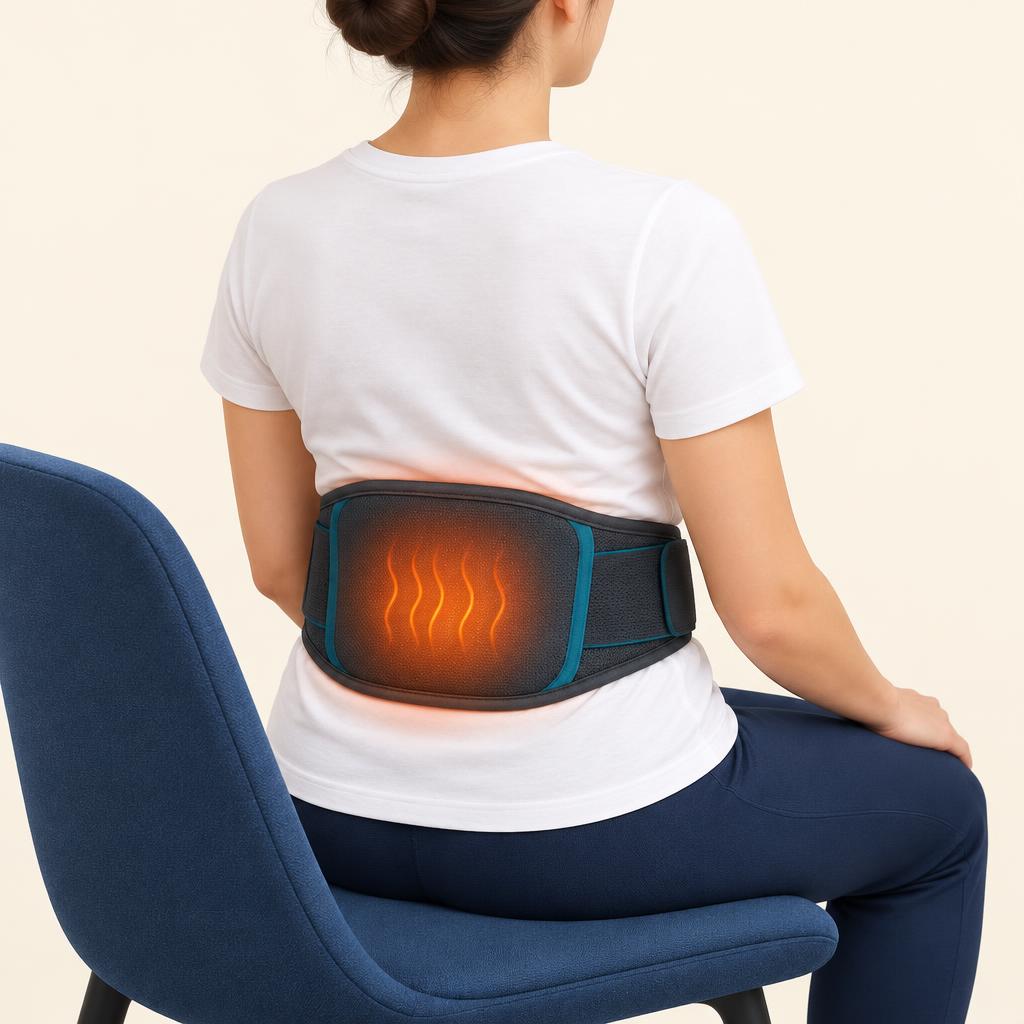
Optional hands-free choice
If reaching behind you is difficult
Vibraflex is a wearable comfort belt with adjustable warmth and vibration, not a hands-on massage or medical treatment. Its stated session timer switches off after 15 minutes; this does not set a rule for how long to use hands or a tennis ball.
One is £79 including VAT, two are £138, and three are £177. Free UK delivery is stated as 2–4 working days with 30-day returns. Review the final total and delivery terms at Shopify checkout before paying.
What to do afterwards
Notice how you feel rather than treating soreness as a sign to press harder. Gentle movement and staying active matter more to back-pain self-care than relying on massage alone, according to the NHS. If pain is not improving after a few weeks or is disrupting daily life, contact a GP or NHS musculoskeletal service.
For more on everyday self-care, see our lower back pain guide. Massage is optional and should never delay medical help for warning signs.
Vibraflex · UK
Explore Vibraflex packages
Free UK delivery in 2–4 working days. Prices include VAT.
Your order
2 Massagers · £138
£69 per massager — you save £20.
Checkout opens on Elomere Select (elomereselect.com), the connected store. Check the seller, delivery and final total before paying.
- Free UK delivery2–4 working days
- 30-day returnsChange of mind covered
- Shopify checkoutOpens on Elomere Select
- GBP pricesFinal total at checkout
Self-massage questions
How long should I massage my lower back?
There is no single proven duration that suits everyone. Start with a brief, gentle try and stop if it feels painful or makes symptoms worse. Vibraflex itself has a 15-minute automatic shut-off; that is a device setting, not a general massage prescription.
Can I massage my own lower back without help?
Yes. You can use an open hand for gentle circles where you can reach, or place a tennis ball between the muscles beside your spine and a wall. Keep the pressure comfortable; do not press directly on the spine.
Where should a tennis ball go?
Position it against a soft area to one side of your lower spine, not on the bony midline. Lean against a wall gently so you can control the pressure. Stop if it hurts.
Should I massage a painful back?
Do not try to push through sharp, severe or worsening pain. If you are unsure why your back hurts, have new numbness or weakness, or have symptoms that interfere with daily life, seek medical advice. NHS guidance explains when to get urgent help.
Is heat necessary before massage?
No. Some people enjoy a warm shower or a wrapped heat pack for comfort, but warmth is optional. Do not use heat on numb or broken skin, and follow the device instructions if you use a heated belt.
Does Vibraflex treat back pain?
No. Vibraflex is a wellbeing device for adjustable warmth and vibration while worn across the lower back. It does not diagnose or treat the cause of pain and is not a substitute for medical advice.
Is the Vibraflex a medical device?
No. The Vibraflex is a wellbeing and comfort device for relaxing tired, tight back muscles. It is not intended to diagnose, treat, cure or prevent any condition. If you have ongoing or severe back pain, speak to your GP or physiotherapist.